
H.E. Sheikh Nahyan bin Mubarak Inaugurates Forbes Middle East Healthcare Leaders Summit in Abu Dhabi
H.E. Sheikh Nahyan bin Mubarak: Under the UAE President’s leadership, the UAE has become a centre of healthcare excellence Khuloud Al Omian: Summit brings together expertise and perspectives that help define standards for healthcare excellence Shaista Asif: Summit provides a platform to advance the fundamental transformation reshaping healthcare
![]() Abu Dhabi, UAE – 22 September 2026: H.E. Sheikh Nahyan bin Mubarak Al Nahyan, UAE Minister of Tolerance and Coexistence, affirmed that the United Arab Emirates is moving forward with confidence and strength to be among the world’s leading nations, under the leadership of the President, His Highness Sheikh Mohamed bin Zayed Al Nahyan, who has clearly defined the country that everyone is expected to build: one that welcomes people from around the world, puts technology to work, supports research and innovation, and cares for the health and wellbeing of citizens and residents alike. His Excellency explained that the leadership of His Highness Sheikh Mohamed bin Zayed Al Nahyan has made the UAE a centre of healthcare excellence, with exceptional facilities, accomplished professionals and productive global partnerships, stressing that the country’s ambition is not simply to adopt what others have achieved, but also to help establish the standards by which healthcare excellence will be defined, measured and judged.
Abu Dhabi, UAE – 22 September 2026: H.E. Sheikh Nahyan bin Mubarak Al Nahyan, UAE Minister of Tolerance and Coexistence, affirmed that the United Arab Emirates is moving forward with confidence and strength to be among the world’s leading nations, under the leadership of the President, His Highness Sheikh Mohamed bin Zayed Al Nahyan, who has clearly defined the country that everyone is expected to build: one that welcomes people from around the world, puts technology to work, supports research and innovation, and cares for the health and wellbeing of citizens and residents alike. His Excellency explained that the leadership of His Highness Sheikh Mohamed bin Zayed Al Nahyan has made the UAE a centre of healthcare excellence, with exceptional facilities, accomplished professionals and productive global partnerships, stressing that the country’s ambition is not simply to adopt what others have achieved, but also to help establish the standards by which healthcare excellence will be defined, measured and judged.
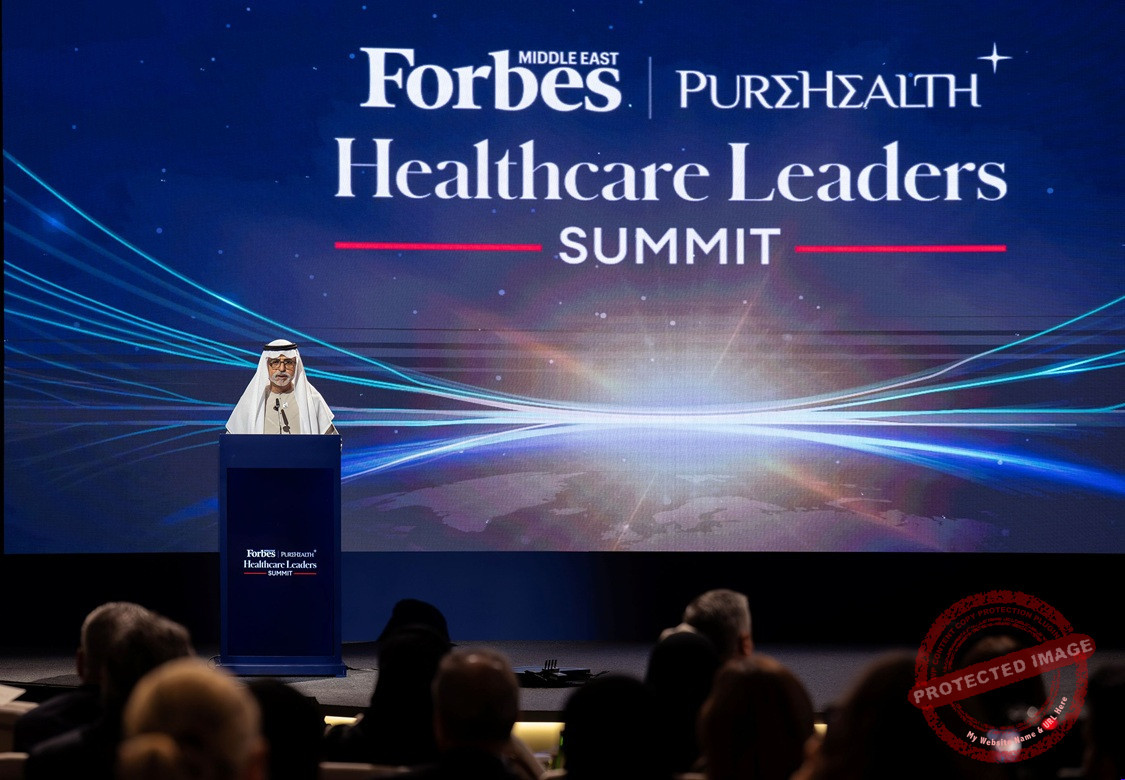 Abu Dhabi, UAE – 22 September 2026: H.E. Sheikh Nahyan bin Mubarak Al Nahyan, UAE Minister of Tolerance and Coexistence, affirmed that the United Arab Emirates is moving forward with confidence and strength to be among the world’s leading nations, under the leadership of the President, His Highness Sheikh Mohamed bin Zayed Al Nahyan, who has clearly defined the country that everyone is expected to build: one that welcomes people from around the world, puts technology to work, supports research and innovation, and cares for the health and wellbeing of citizens and residents alike. His Excellency explained that the leadership of His Highness Sheikh Mohamed bin Zayed Al Nahyan has made the UAE a centre of healthcare excellence, with exceptional facilities, accomplished professionals and productive global partnerships, stressing that the country’s ambition is not simply to adopt what others have achieved, but also to help establish the standards by which healthcare excellence will be defined, measured and judged.
His Excellency made the remarks as he inaugurated the fifth edition of the Healthcare Leaders Summit – Abu Dhabi 2026, held under his patronage and hosted by Forbes Middle East on September 22–23 in partnership with PureHealth at Emirates Palace Mandarin Oriental, Abu Dhabi. Held this year under the theme “Defining Global Standards in Healthcare Excellence,” the summit brings together more than 100 speakers and around 3,000 participants, including policymakers, healthcare executives, scientists, experts and specialists from the UAE, the wider region and around the world, to explore the key transformations and priorities reshaping the future of healthcare.
Welcoming healthcare leaders in his opening address, H.E. Sheikh Nahyan bin Mubarak Al Nahyan said: “It gives me great pleasure to welcome you to Abu Dhabi and to the fifth edition of the Healthcare Leaders Summit.” His Excellency added that the summit’s theme, “Defining Global Standards in Healthcare Excellence,” raises an important question about what excellence should mean at a time when science, medicine, technology and patients’ expectations are changing so rapidly.
His Excellency affirmed that the United Arab Emirates is moving forward with confidence and strength to be among the leading nations of the world, guided by the President, His Highness Sheikh Mohamed bin Zayed Al Nahyan. He said that His Highness the President has been clear about the country everyone is expected to build: one that welcomes people from around the world, puts technology to work, supports research and innovation, and cares for the health and wellbeing of citizens and residents alike.
His Excellency added that the leadership of His Highness Sheikh Mohamed bin Zayed Al Nahyan has made the UAE a centre of healthcare excellence, with exceptional facilities, accomplished professionals and productive global partnerships. He affirmed that the UAE’s ambition is not simply to adopt what others have achieved, but also to help establish the standards by which excellence will be defined, measured and judged.
His Excellency said that health systems around the world face a growing burden from chronic and preventable diseases. He explained that longer lives are one of humanity’s great achievements, but they require greater emphasis on prevention, early diagnosis and helping people remain healthy. He affirmed that these challenges are among the reasons the Healthcare Leaders Summit matters so much.
His Excellency noted that, over the course of two days, the summit provides participants with an opportunity to examine how healthcare can be improved and delivered. He explained that he did not consider himself qualified to comment on the technical aspects of the participants’ work, but wished to offer several general observations as an interested layman concerned with healthcare and its future.
In his first observation, His Excellency affirmed that advances in technology have opened extraordinary possibilities for diagnosis, treatment, prevention and research. Technology can help people see what previously could not be seen, recognise patterns they might otherwise miss and make knowledge available with extraordinary speed. Nevertheless, His Excellency stressed that no matter how powerful technology becomes, the art of medicine will still require a physician to identify the problem, prescribe the treatment and interact directly and humanely with the patient.
His Excellency called for close partnerships between decision-makers, pharmaceutical companies, technology developers, physicians, biomedical engineers, hospitals and colleges of medicine. He affirmed that no institution represented at the summit can create the future of healthcare alone, and that collaboration must be a hallmark of all efforts in this field.
In his second observation, His Excellency said that the management of healthcare may be less dramatic than scientific discovery, but is equally important. He explained that as populations grow, people live longer, and research produces better but more expensive treatments and equipment, management becomes a decisive factor in controlling costs, improving decisions, raising efficiency, enabling organisational change and determining how efforts and resources can best be allocated to care for patients.
His Excellency affirmed that the most demanding test of any healthcare system is not the treatment it offers its most fortunate patients, but the care it delivers to its ordinary patients. Excellent management is therefore essential to providing high-quality healthcare to all.
In his third observation, His Excellency noted that excellence in healthcare has a regional dimension, and that concern in the Middle East must extend to the health of the entire region. He said that disease respects no national boundary and neither should knowledge, stressing the need for research, clinical experience, data and successful models of prevention and treatment to move more easily between countries across the region.
His Excellency affirmed that the UAE will continue to work to strengthen regional cooperation and coordination in healthcare, supporting the exchange of expertise and knowledge and contributing to the development of more effective solutions to shared health challenges.
In his final observation, which relates directly to his responsibilities as Minister of Tolerance and Coexistence, His Excellency affirmed that healthcare professionals hold themselves to exceptional professional standards. In caring for a patient, they make no distinction based on nationality, religion, language, gender or social status; they treat the person in front of them.
His Excellency expressed his appreciation for this professionalism and stressed the importance of ensuring that healthcare systems remain humane as they become more intelligent and advanced. He called for this important principle to be protected as automation expands across healthcare systems, because it cannot simply be written into a protocol and can easily be lost without anyone noticing.
Concluding his address, His Excellency said that the participants had come from many countries to consider the future of healthcare. He expressed his hope that if the summit helps define a global standard for healthcare excellence, that standard will be measured not only by the sophistication of technology, but also by the health of people, the accessibility of care and the humanity with which that care is delivered. His Excellency also expressed his pleasure that Abu Dhabi had been chosen to host this important event and thanked Forbes Middle East and PureHealth for convening the summit, as well as every speaker and participant, wishing them success in the summit’s proceedings.
Khuloud Al Omian, CEO and Editor-in-Chief of Forbes Middle East, said: “This edition comes at a time of accelerating scientific and technological transformation that is redefining the standards of healthcare excellence. From Abu Dhabi, the summit brings together expertise and perspectives that help shape these standards and advance a future where healthcare is more proactive, precise and responsive to people’s needs, reflecting the UAE’s leading position in shaping the future of the sector.”
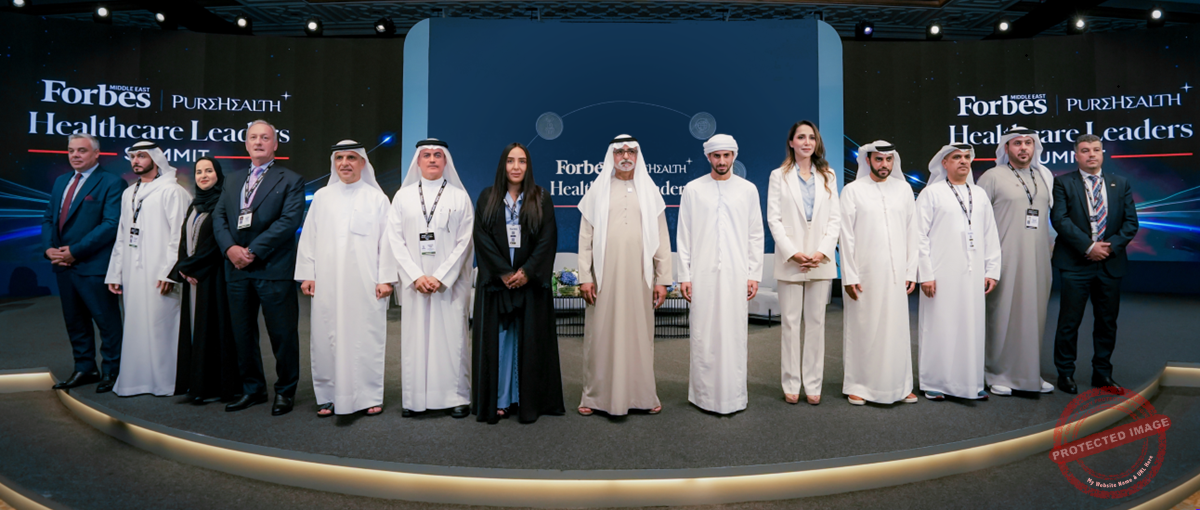 Day one welcomed prominent figures, healthcare leaders and experts, including H.E. Dr Amin Hussain Al Ameeri, Asst. Undersecretary – Health Regulation Sector, Ministry of Health and Prevention; H.E. Dr Rashed Alsuwaidi, Director General, Abu Dhabi Public Health Centre; Shaista Asif, Group CEO, PureHealth; Peter Fedichev, Co-Founder & CEO, GERO; and Madhu Sasidhar, President & CEO, Hospital Division, Apollo Hospitals, alongside leading executives and experts from the UAE and around the world.
Shaista Asif, Group CEO of PureHealth, the summit’s official partner, said: “As health becomes increasingly interconnected and borderless, technology – and particularly AI – is opening new possibilities for how we understand, prevent and deliver care. At PureHealth, we see AI not simply as a tool to advance healthcare, but as an opportunity to make it more personal, proactive and connected to the needs of every individual. By bringing together leading minds, expertise and ideas across industries, we are helping shape a future where innovation translates into better experiences and outcomes for people. Inspired by the UAE’s spirit of ambition and progress, our network will continue to raise the bar for healthcare, harnessing technology and human expertise to transform how health is discussed, perceived and delivered – here in the UAE and around the world.”
Healthcare and business leaders participating in the summit’s sessions included Khaled Ateeq Aldhaheri, CEO, Daman; Dr Marwan Al Kaabi, CEO, Sheikh Shakhbout Medical City; Dr Habiba Al Safar, Dean, College of Medicine and Health Sciences & Professor of Genomics, Khalifa University; Joseph Hazel, Group CEO, APEX Health; and Dr Michael Fakih, Executive Chairman, Blue Ocean Health; Founder, Chairman & Medical Director, Fakih IVF Group.
Day one featured sessions and discussions exploring policy, leadership and the UAE’s national ambition to build the world’s most advanced health ecosystem, as well as the role of the UAE’s evolving regulatory frameworks in enabling innovation and strengthening trust. Discussions also examined the next era of medicine, access to treatment, pharmaceutical innovation and industry evolution, as well as the role of strategic partnerships, international collaboration and knowledge exchange in reshaping healthcare.
The programme also explored the future of fertility and the UAE’s rise as a global hub for advanced reproductive health, including Abu Dhabi’s emergence as a global centre for advanced fertility care and the role of genomics, AI and precision medicine in redefining reproductive health.
Sessions addressing longevity and precision health, and redefining care beyond treatment, explored longer, healthier lives and lifelong wellbeing, as well as the future of patient experience. Discussions examined how innovation, precision medicine and human-centred care can improve health outcomes.
The discussions also addressed the convergence of genomics, molecular and digital biomarkers, integrated health data and advanced diagnostics to enable predictive intelligence, earlier risk detection and more proactive, precise care.
Under the theme of advancing population health and improving outcomes for every generation, discussions addressed the long-term management of chronic and non-communicable diseases, the evolving role of insurance in enabling access, accountability and care delivery, and the importance of prevention and earlier intervention in improving population health outcomes.
Day one also featured a session examining how social media, health misinformation, myths and conspiracy theories can influence medical decisions, as well as how healthcare professionals can strengthen trust in science and evidence-based health information.
Running alongside the main programme, Doctors Circle provided a dedicated platform for clinical discussion through CME-accredited sessions covering robotic-assisted surgery, AI and early disease detection, liver disease, genetic risk and inherited conditions, fertility and reproductive medicine, longevity, women’s health and breast cancer, mental health, paediatric surgery and rare diseases.
The summit continues on its second day with a keynote address on rethinking healthcare at scale through smarter, more integrated and resilient systems capable of responding to evolving health needs and delivering stronger outcomes.
Day two will also feature a session on intelligent clinical ecosystems and transforming care through AI, robotics and data, examining how AI, robotics and intelligent data are changing clinical environments and healthcare delivery.
Other day-two discussions will cover connected health, wearable devices and digital platforms; biological, cellular and gene therapies; the health economy, growth and expansion; investment in health, talent and opportunity; and the importance of investing in people, partnerships and knowledge exchange.
The programme will also include a session on the evolution of aesthetic medicine and raising the standard of care, addressing medically supervised aesthetics and its contribution to health and wellbeing. Sessions under the theme of scientific breakthroughs and global collaboration will examine how surgical innovation, clinical development and real-world evidence can accelerate healthcare innovation.
Day-two sessions will also explore the future of care delivery through virtual platforms, remote monitoring and hybrid models, as well as the shift in mental health from awareness to action through early intervention.
The final theme, focusing on capital with purpose and its role in driving growth, value and sustainability, will include a session on capital, partnerships and leadership, exploring how capital, strategic partnerships, entrepreneurship and leadership can build healthcare capabilities and drive sustainable growth and impact.
Day two speakers include H.E. Dr Essam Al Zarooni, CEO – Medical Services Sector, Emirates Health Services; H.E. Mohamed Haji Al Khoori, Director General, Khalifa Bin Zayed Al Nahyan Foundation; Professor Shafi Ahmed, Consultant, Surgeon, Barts Health NHS Trust; Dr Tarek Youssef Hosni, CEO, Jamjoom Pharma; Dr Asma Al Mannaei, Executive Director of the Research and Innovation Centre, DoH Abu Dhabi; and Majid Kaddoumi, SVP EurAsia, Medtronic, alongside healthcare leaders, physicians and international experts.
The summit is held in partnership with PureHealth, with Al Khayyat Investments, APEX Health and Capital Health as event partners; Sheikh Shakhbout Medical City as the CME accreditation partner; Khalifa Bin Zayed Al Nahyan Foundation as the supporting partner; and the Emirates Medical Association as the scientific partner.
For more information and registration, please visit the official Healthcare Leaders Summit – Abu Dhabi 2026 website.